
My September Garden
by Jo Anna Natale, Fairfax Master Gardener
September in the garden requires something like a back-to-school mindset, saying goodbye to summer’s lackadaisical ways to once again focus on progress and improvement. It’s time to revisit the rules, call out the bullies and engage in some fresh and constructive thinking.
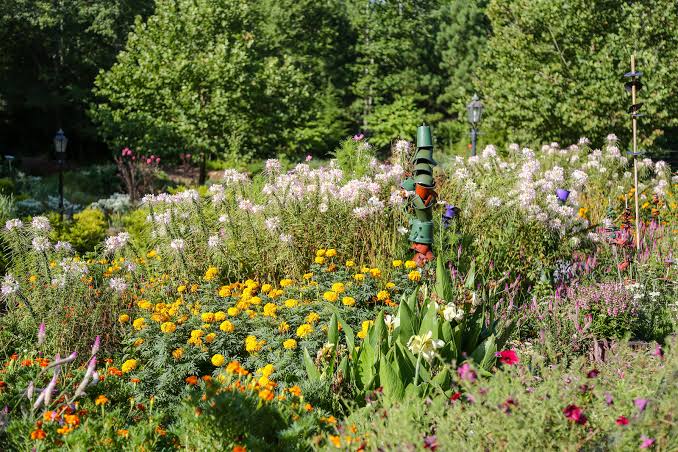 To the less experienced, a late-summer garden can seem robust — finally at its peak! Why mess with it? But savvy gardeners know better. Lift those heavy perennial stems, and you’ll likely see shade-protected weeds mischievously multiplying. You’ll find powdery mildew invading peonies and phlox, thanks to too much humidity and crowding. And that uncontained mint plant spiking those summer mojitos? Its underground root system has likely quietly colonized an entire bed.
This is no time to hang up the hori-hori. September definitely calls for doing what’s newly necessary in the garden, but the good news is that, as you go, you’ll rediscover some of the garden’s joys, too.
In my own garden, I tackle one bed at a time. I thoroughly weed out the obvious offenders – the stiltgrass, the violet, the determined dandelion. But I also thin the pretty plants, the ones whose seeds, if left to fly – or whose runners, if left to run – will be next year’s greediest growers (case in point, the so-called “obedient” plant). I prune leaves turned white with mildew, as well as those that look stressed, pocked, or brown; I cut the spiky stems of my hosta blooms, the overreaching tendrils of my clematis vines, and the thigh-high blades of Siberian iris. These excesses of summer are all too much. The eye wants to discern shapes, heights and colors of individual plants, as well as to appreciate the landscape’s wider view. Not only does a little editing ease things visually, it makes practical sense, too. Plants with good air circulation tend to have fewer problems, and any diseases that might occur, stand less chance of overwintering in soil, repeating their rampage next year.
It’s hardly all drudge. Unlike summer’s too-hot-to-garden days, September is largely an enjoyable month to be outdoors. How pleasant, as a byproduct of the work, to rediscover your plants, to enjoy their late gifts, and to begin making adjustments that will affect next year’s beauty and bounty. Has your lavender flopped over? Pin down a branch with a heavy rock. Come spring, you might just find that the trapped limb has taken root, increasing your stock for free. The same technique works for other herbs, too, such as sage, thyme and rosemary. September is also a fine time to divide and relocate peonies and iris, as well as clumps of salvia, daisy and astilbe. And, if your amaryllis has summered outdoors (as it should have), September is the right month to lop off its foliage, free the bulb from soil and rest it a while before repotting for holiday blooms and gifting.
Gifting? You can be generous in September, too. Your coneflowers will inevitably have cast seeds, creating new plants to present to friends. Lift a shoot of your oakleaf hydrangea and share its glory. Dig up what you recall as a too-tight clump of daffodils, and bag a dozen bulbs for your boss. The still warmish months ahead will give those offerings time to settle into their recipients’ soil and thrive in their next season.
A few caveats to all the garden editing and sharing that can happen in September. As the season winds down, so does the available food for wildlife, so it’s important to know what to leave untouched. Spent sunflowers provide seeds for birds, as do coneflower heads and the seedpods dangling from baptisia. They may not be the prettiest things, but they allow the birds to continue to eat from the landscape, rewarding you in fall and winter with their enduring songs.
In addition, remember that trimming is one thing, heavy pruning another. Don’t overdo it, and especially not at the wrong time. September is too late to prune spring-flowering trees and shrubs, for example. These have already set buds for next spring, and pruning now will sacrifice blooms just when you are most looking forward to them. Know what you’re pruning, as well as the proper time to do so. And when cutting, don’t forget to sanitize your tool as you move from plant to plant. (Wiping your pruner with rubbing alcohol or a little bleach diluted in water works well.) Skip this step and you’ll risk spreading disease as you go.
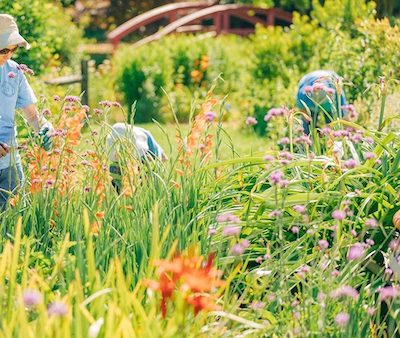 Lastly, don’t give up on the vegetable patch. Seedlings of lettuce, kale, spinach, broccoli, chard and other fall veggies will thrive if planted early in September, often producing into November and sometimes beyond. Some of these cool-weather crops might actually fare better in fall than they do in spring, as the pests that attack them earlier in the year peter out by autumn.
When summer is fading and daylight starts shrinking, you may think your garden work is winding down, too. Not so. When it comes to the garden, think of back-to-school time as back-to-gardening time: The efforts you make now – at the cusp of fall – will go a long way towards helping your garden score high marks later.