
Rust: The Fall Color You Don’t Want
by Janet Scheren, Fairfax Master Gardener
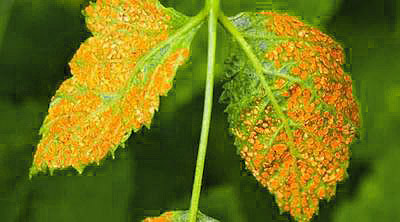
Rust on Brambles
It’s fall. Summer is officially over. You may be looking forward to reveling in autumnal shades of gold, bronze, burnt orange and burgundy, but there’s one rusty color you would rather not see in your garden this fall: the rusty orange of fungal disease spreading among your favorite plants.
Rust is the common name for a large group of highly specialized fungal diseases that affect a wide variety of ornamental plants, shrubs, trees and even grasses. Most rust fungi are obligate parasites, which means they require living plant tissue to grow and reproduce. Many, if not most, infect a relatively narrow range of plants. It may seem as though each of your favorite plants has its own special kind — aster rust, azalea rust, carnation rust, chrysanthemum rust, daylily rust, geranium rust, iris rust, rose rust, hollyhock rust, pine gall rust, viola rust, and on and on it goes.
Rust diseases are unusually complex. Some rust fungi complete their entire life cycle on one host, while others require two unrelated host plants. Still others produce several different types of spores during their life cycles. The good news is that while severe or repeated infections can weaken plants or reduce flowering, rust diseases rarely kill an otherwise healthy plant.
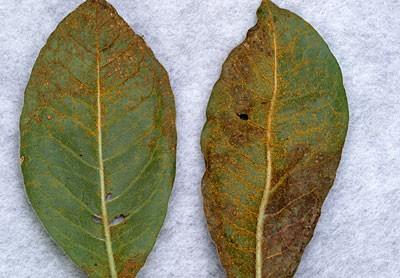
Rust on azalea leaves
As with many fungal diseases, rust is strongly influenced by growing conditions. Periods of wet, humid weather that leave foliage damp for extended periods create favorable conditions for rust spores to germinate and infect plants. The wet periods and humid conditions we experienced during portions of this growing season may have increased the risk of rust in our gardens this fall.
Conditions within the garden can influence the development and spread of rust as well. Crowded plants with poor air circulation, or those receiving less sun than optimal, can be more susceptible to fungal diseases, including rusts. As always, good gardening practices can make a big difference. These include watering plants at the roots rather than overhead, and watering early enough in the day that foliage can dry quickly instead of remaining wet overnight. Improving air circulation and removing infected leaves and other plant debris also help reduce disease pressure.
Rust often first appears as chlorosis, or yellowing, on the upper surfaces of leaves. You may also notice powdery masses of spores produced in small pustules, typically on the undersides of leaves. Depending on the particular rust fungus and stage of its life cycle, these pustules may be yellow, orange, reddish brown, dark brown or black. Some rust fungi also infect stems and branches, where they can produce swellings, galls or cankers.
What to Do
The best way to manage rust disease is to prevent it. If you’ve experienced rust in your garden, look for rust-resistant cultivars when selecting new plants. Inspect plants carefully before adding them to your garden. Follow good gardening practices and monitor susceptible plants throughout the growing season. Fungicides can be used when necessary, but they generally work best as preventive treatments or when applied very early in the disease cycle.
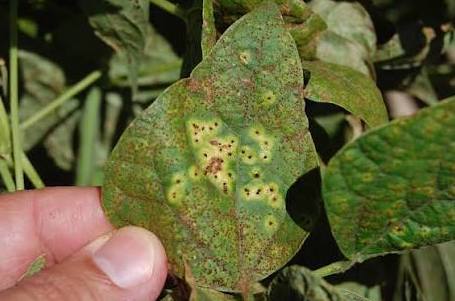
Rust on bean leaf
For rust disease that required two unrelated plants for the diseases cycle, remove the alternate host. For example, Pine is the alternate host for Asters and Goldenrods. Apples, Hawthorn, Quince, Serviceberry, Cotoneaster, Photinia and Mountain Ash need Eastern Red Cedar or other Junipers for the rust disease to progress.
Ultimately, rust management is best approached through a combination of practices. Choosing resistant plants, reducing leaf wetness, improving air circulation, removing infected material and keeping plants healthy can often keep rust at bay or at tolerable levels while preserving the appearance and vigor of your ornamental garden. Keep fungicides as a backup if absolutely needed.
- References
- Rust Diseases of Ornamental Crops, University of Massachusetts, Amherst
- Rust Diseases on Ornamental Crops, University of Connecticut
- Plant Plagues: The Rust Diseases, Rutgers University