
From Waste to Gourmet Feast: Homegrown Mushrooms
by Janet Scheren, Fairfax Master Gardener
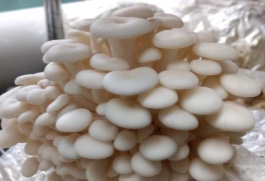
Oyster Mushrooms
Growing edible mushrooms at home is an efficient way to turn organic materials into fresh, nutrient-rich food. Unlike traditional crops, mushrooms don’t require sunlight or soil. Instead, they thrive on materials such as straw, sawdust, coffee grounds, logs and other byproducts, making them well-suited to both indoor and outdoor systems. This ability to convert waste into food, combined with relatively simple growing requirements, has made mushroom cultivation increasingly popular among home gardeners and food enthusiasts.
Growing your own mushrooms also offer strong culinary advantages. Many gourmet varieties–such as oyster mushrooms and lion’s mane–can be expensive or difficult to find fresh. Growing them at home provides a steady, affordable supply and allows growers to expand gradually with experience.
Best Types of Mushrooms to Grow at Home
Not all mushrooms are equally suited to home cultivation, but several varieties offer a reliable starting point. Oyster mushrooms are widely considered the easiest and most adaptable, growing quickly and thriving on a variety of substrates. They are especially well-suited to indoor growing using straw or similar materials.
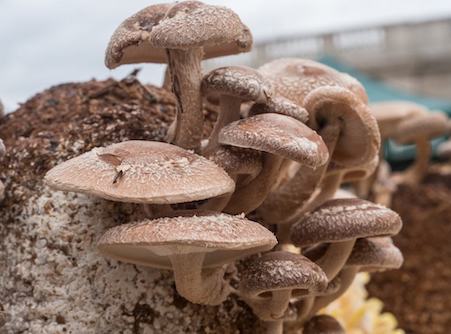
Shiitake Mushrooms
Shiitake mushrooms are another popular choice, valued for their rich flavor. They are most commonly grown outdoors on hardwood logs, where they take longer to establish but can produce for several years.
Lion’s mane mushrooms provide a distinctive option for indoor growers. Known for their shaggy appearance and seafood-like texture, they grow best on wood-based substrates such as sawdust or pellets and require slightly more attention than oysters, but can still be grown by patient beginners.
The many varieties of oyster mushrooms offer different growing preferences. Blue and pearl oysters perform well in cooler conditions, while golden, pink and phoenix oysters prefer warmer environments. King oysters are more demanding, requiring tighter environmental control and longer growing periods, but are valued for their dense, meaty texture.
Substrates and Growing Systems
Mushrooms grow on substrates that serve as both their food source and structure. The type of substrate and setup depends largely on whether the mushrooms are grown indoors or outdoors.
Indoor systems rely on prepared substrates such as straw, sawdust or wood pellets. These materials are typically pasteurized or sterilized and then inoculated with spawn, which contains the living mycelium. Indoor growing allows for greater control over temperature, humidity and airflow, resulting in faster growth and more predictable harvests. Oyster mushrooms and lion’s mane are particularly well-suited to this method.
Outdoor systems utilize hardwood logs as a natural, long-term substrate. Freshly-cut logs from species such as oak, maple or beech are inoculated with spawn and placed in shaded, moist environments. While this method is most commonly associated with certain species, several mushrooms can be grown successfully on logs. Oyster mushrooms, particularly blue, pearl and phoenix varieties, often establish more quickly and produce sooner, though typically for a shorter lifespan. Lion’s mane can also be grown on logs under similar conditions, while maitake is possible but slower to establish and more sensitive to site conditions. In general, log-grown systems require more time and depend on climate and wood type, but provide steady, seasonal production over multiple years.
Mushroom grow kits as well as mushroom log beginner bundles are available online and offer a simple way to start growing. These kits typically come pre-inoculated with spawn, allowing beginners to skip preparation steps and begin harvesting mushrooms much sooner.
Growing Mushrooms Indoors with Substrate
Indoor cultivation using substrates, such as straw, is the fastest and most accessible method for most home growers. The process begins with substrate preparation, often by pasteurizing straw in hot water to reduce competing organisms. Once cooled and drained, the substrate is combined with spawn in a clean environment to ensure even distribution.
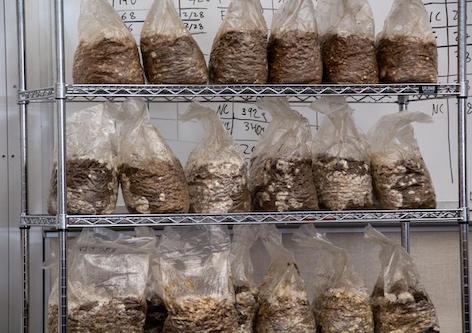
Growing mushrooms on substrate
After inoculation, the material is placed into containers or grow bags and kept in a warm, dark space during the colonization phase. During the next one to three weeks, depending on the species, the mycelium spreads throughout the substrate, forming a dense network. Once fully colonized, the growing environment is adjusted to encourage fruiting. Increased humidity, fresh air exchange and indirect light signal the mushrooms to begin forming fruit.
During the fruiting stage, maintaining consistent moisture and airflow is critical. Mushrooms develop rapidly under the right conditions and are typically ready for harvest when the caps are fully formed, but not yet flattened. Most indoor systems allow you to produce repeated harvests from the same substrate.
Growing Mushrooms on Logs
Log cultivation follows a slower but durable process that closely mimics natural growing conditions. Fresh hardwood logs are cut and allowed to rest briefly before inoculation. Holes are drilled into the logs and filled with spawn, then sealed with wax to protect against contamination and moisture loss.
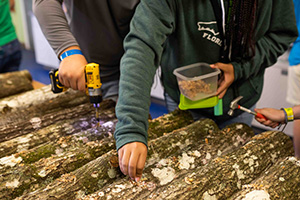
Growing Mushrooms on Logs
The logs are placed in a shaded, humid outdoor environment where they remain during an extended colonization period that can take several months to over a year, depending on the species. During this time, the mycelium gradually spreads through the wood. Once colonization is complete, fruiting can be encouraged by soaking the logs in water or through natural seasonal changes that stimulate mushroom production.
Properly maintained logs can produce mushrooms one to several times per year and remain productive for multiple years. Although this method requires patience, it offers a low-maintenance, long-term growing system with consistent seasonal yields.
Harvest Time and Ongoing Care
Harvesting mushrooms at the right stage ensures the best flavor and texture. Most varieties should be picked just before full maturity, when caps are developed but not fully open. Indoor-grown mushrooms often produce several flushes over a short period, while outdoor log systems yield more gradually over multiple seasons.
In both methods, proper moisture and airflow are essential to continued production. With basic care and attention, home mushroom cultivation can provide a steady supply of fresh, high-quality food while making productive use of organic materials that might otherwise go to waste.
- References
- Shiitake Mushroom Production on Logs, Gregory Frey and William C. Worrell, Virginia Cooperative Extension ANR-102P (ANR-329P)
- A Beginner’s Guide to Growing Mushrooms at Home, Jacob Hawkes, Paul Grossl and Melanie Stock, Utah State University Extension
- Oyster Mushroom Production, Khalid Hameed, Van T. Cotter, Hui-Ling Liao and Chih Ming Hsu, University of Florida IFAS Extension
- Growing Gourmet and Medicinal Mushrooms, Paul Stamets
- Radical Mycology: A Treatise on Seeing and Working with Fungi, Peter McCoy