
Lawn Mushrooms — What To Know & What To Do
by Ann M. Mason, Fairfax Master Gardener
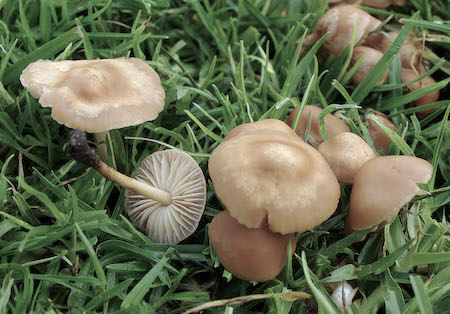
Marasmius oreades Mushroom
During your morning walk around the yard, you observe mushrooms have popped up in the lawn! But why do mushrooms appear in the lawn? Virginia Tech experts suggest that the gardener will notice them during periods of temperature (warm or cold) or moisture stress periods. North Carolina State University experts report they emerge following rain on warm days. Just before the emergence of the fruiting body, the observant gardener might see a localized darker green turf area. This area may indicate the presence of added nitrogen created from fungal degradation of organic matter in the soil.
Mushrooms are the fruiting structures of fungi in the phylum Basidiomycota living in the soil. Fungi (like mushrooms) have hyphae, the root-like structures that mass together to form a branching network called mycelium. The mycelium can intermix, twine and partner with the roots of trees and other plants to form a web called a mycorrhizal network. Hyphae excrete enzymes that digest organic materials into smaller parts for their nutrition and that of other organisms in the surrounding area. Thus, fungi decompose organic matter, including dead leaves, thatch, wood such as dead roots, insects, animal dung and more. All of this degradation helps to improve the soil and feed the soil microbiome, containing soil microorganisms like bacteria and protozoa, as well as other soil critters like arthropods, earthworms, nematodes and insects using the mycorrhizal network.
Most mushroom appearances are part of nature’s cycle, are not harmful and require no chemical application. Management of these fruiting bodies is up to the gardener and includes hand-picking, mowing or ignoring.
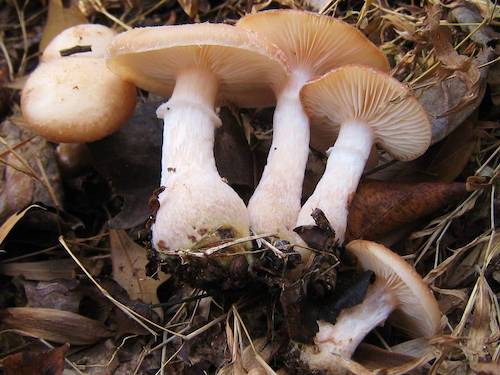
Armillaria gallica
There are two exceptions. First, observation of the honey-colored fruiting bodies of Armillaria indicates the presence of oak root fungus that may be decomposing tree roots (or trunks), increasing the likelihood that the tree may fall. Once observed, there are no curative actions. Instead, a gardener’s preventive action is needed — have a certified arborist assess the tree. Armillaria are attracted to stressed trees. Gardeners can take proactive steps to avoid compacting tree root zones and injuring exposed and below-ground tree roots.
Second, observation of dead turf areas along with brown-colored, shallow-cupped fruiting bodies with widely spaced gills, suggests these mushrooms are Marasmius oreades. This fungus has a water-repellent hyphae mass that scientists report releases ammonium nitrogen or cyanide. To confirm, dig the area and pull back the turf to expose the hyphal mass. The late United Kingdom mycologist, James W. Deacon (1947-2021), suggested using a surfactant such as a dilute solution of dish soap. Once a hydrophobic layer exists, turfgrass will not grow. North Carolina State University suggests aerating the area using a hollow tine aerator, applying soil surfactants and heavily irrigating to re-wet the hydrophobic layer.
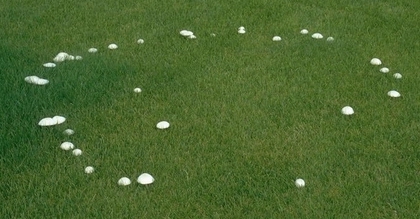
Mushroom in lawn
As with harvesting all potential foods from nature, be aware of the location. While some mushrooms in the lawn are edible, there are also poisonous ones that look similar to edible ones. Be sure to properly identify all mushrooms prior to eating. Also, be aware that fruiting bodies from lawns will contain lawn chemicals and pesticides. Be informed before eating any wild mushrooms.
Fruiting bodies are part of the fungi life cycle. There is no way to remove fungi from the soil. Once seen, the gardener can expect fruiting bodies to appear whenever environmental conditions prompt the fungi to reproduce.
Routine turfgrass maintenance with soil tests, properly timed nutrient applications, mowing cool season grasses high (3 to 4 inches) and periodic aeration and dethatching can keep a thick thriving lawn. Importantly, removal of an excessive thatch layer and aerating the soil can minimize the conditions leading to the water repellent mycelium layer. These actions will not eliminate soil fungi or prevent the appearance of lawn mushrooms, but they can minimize the hydrophobic mycelium buildup that leads to dead grass areas. A well-maintained lawn will reduce the bare spots that attract opportunistic lawn weeds, too.
-
References
- Managing Mushrooms in the Lawn, Virginia Cooperative Extension
- Don’t Eat Those Wild Mushrooms…unless you know what you are doing!, Ellen Crocker and Nicole Ward Gauthier, University of Kentucky Fact Sheet PPFS-GEN-14
- Mushrooms in Your Yard: Friend or Foe, Richmond County Center, North Carolina Cooperative Extension